

Trial Tech, Trial Technician, or Hot Seat Operator: What's the Difference?
Updated: 4 hours ago

If you work in litigation long enough, you'll probably hear several different names for the person sitting behind the laptop managing technology during trial. Trial tech, trial technician, hot seat operator, and trial presentation specialist are all commonly used, although which term you hear most often can depend on where you practice and who you're working with.
In the Pacific Northwest, I hear "trial tech" and "trial technician" regularly. In other parts of the country, "hot seat operator" may be more familiar, while some companies and legal teams prefer "trial presentation specialist." For the most part, these terms describe the same general role: the person responsible for managing the technology and presentation of case materials during trial.
The terminology can make the job sound fairly straightforward. Someone sits behind a laptop, pulls up exhibits, and puts them on a screen. That's certainly part of it, but there is considerably more happening behind the scenes.
What Does a Trial Tech Actually Do?
During trial, attorneys have enough competing for their attention. They're examining witnesses, listening to testimony, responding to opposing counsel, watching the judge and jury, and making decisions about where to take the case next. The trial technician handles the technology supporting that work so the attorney doesn't also have to manage the presentation system.
On any given day, that can include displaying electronic exhibits, moving to specific pages or portions of documents, creating callouts and highlights, presenting demonstratives, playing deposition video, managing presentation software, and troubleshooting courtroom technology. Depending on the case, the trial tech may also have spent considerable time before trial organizing exhibits, preparing video, working through witness materials, or testing the equipment that will be used in court.
The job becomes more interesting when the trial stops following the plan, which doesn't take very long. A witness may give an unexpected answer. An attorney may skip part of an outline, return to an exhibit from earlier in the examination, or suddenly decide they need something they hadn't planned to use. Courtroom equipment can also behave perfectly during testing and then choose the worst possible moment to stop cooperating.
A trial tech has to be able to follow those changes and respond without pulling attention away from what's happening in the courtroom. When everything is working properly, the technology tends to disappear into the background. The jury sees the evidence, the attorney continues the examination, and nobody needs to think very much about the person making it happen.
Why Is It Called the "Hot Seat"?
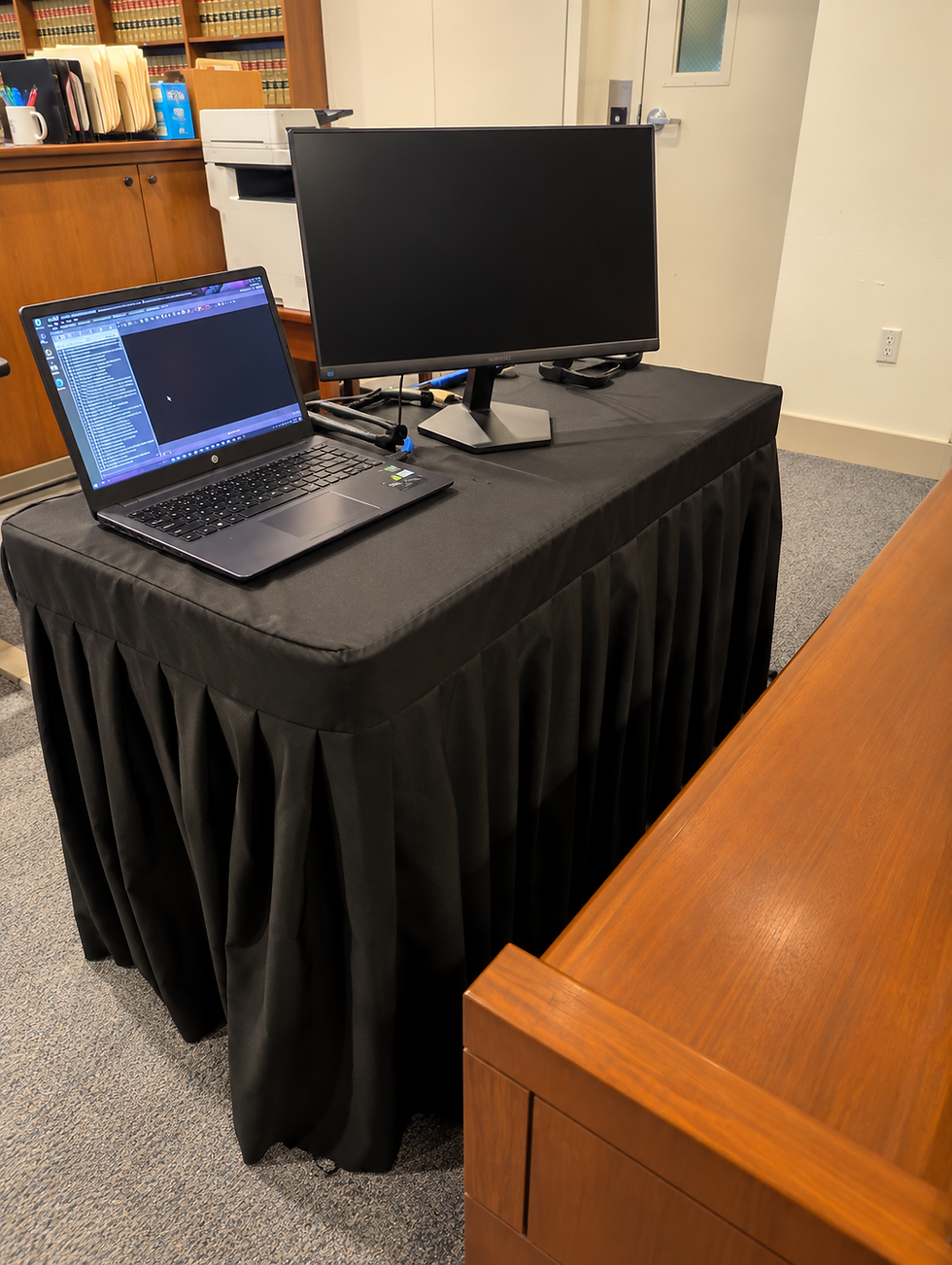
The name makes considerably more sense once you've actually sat there. The "hot seat" is generally at counsel table or immediately beside it, where the person operating the trial presentation system can communicate with the legal team and control what is being displayed throughout the courtroom.
You're working live while court is in session, which means you're listening to the attorney, following the witness, keeping track of the presentation, and preparing for whatever may be needed next. An attorney might ask for Exhibit 247, page 16, then ask you to enlarge paragraph three and highlight two sentences without stopping the examination while you do it. A moment later, they may move somewhere else entirely.
That combination of live presentation and immediate response is where the term "hot seat operator" comes from. It's still widely used throughout litigation support, even though plenty of people doing the same work are called trial technicians or trial techs instead.
Is a Trial Technician Different From a Trial Tech?
Usually, no. "Trial tech" is simply shorthand for "trial technician," and both terms commonly describe someone providing live courtroom technology and presentation support.
Where you can find a meaningful difference is in the scope of the work. One trial technician may be hired primarily to operate electronic exhibits while court is in session. Another may become involved weeks before trial and help organize exhibits, prepare deposition clips, work with presentation materials, test courtroom equipment, coordinate with the legal team, and then handle the live presentation once trial begins.
That is why I wouldn't rely too heavily on the title when deciding whether someone is the right fit for a case. Two people can both call themselves trial technicians and offer very different levels of support. What matters is what they're actually prepared to handle and whether that matches what the legal team needs.
What About a Trial Presentation Specialist?
"Trial presentation specialist" is another term you'll encounter, particularly when the role involves substantial work preparing visual case materials in addition to presenting them in court. There is a lot of overlap with trial technicians and hot seat operators, and in some situations the titles are used interchangeably.
Depending on the person or company, a trial presentation specialist may place more emphasis on developing demonstratives, graphics, presentations, or other visual materials used to explain the case. Someone else using the same title may handle electronic exhibits, deposition video, courtroom equipment, and live presentation in much the same way as a trial tech.
Litigation support has developed several names for work that doesn't always fit neatly into one job description, which is why the title itself only tells you so much.
What Should You Actually Look For?
If you're hiring someone to support a trial, their title matters much less than what they can actually do when court is in session. Ask about their courtroom experience and the presentation platforms they use, but also find out what they can handle before trial begins. If your case involves deposition video, a large exhibit set, demonstratives, or equipment that needs to be brought into the courtroom, those are things worth discussing before everyone arrives for the first day of trial.
I would also ask how they handle changes and technical problems because both are part of the job. Courtrooms vary considerably in the technology they provide, and trials have a habit of changing direction. Knowing presentation software is important, but so is being able to follow what's happening in the room, stay organized when the plan changes, and solve a problem without creating another one for the trial team.
The person in the hot seat is often managing several things at once while trying to make all of it look relatively uneventful from the other side of the courtroom. That's where actual courtroom experience starts to matter.
Whatever You Call It, the Role Is the Same Where It Matters
Trial tech, trial technician, hot seat operator, and trial presentation specialist may mean slightly different things depending on the firm, company, or part of the country. In practice, there is enough overlap that the title is rarely the most important distinction.
What matters is whether the person behind the technology understands the work, can keep up with the pace of trial, and can provide the level of support the case requires. The legal team should be able to focus on trying the case while someone they trust handles the technology supporting it.
Whatever title happens to be on the email signature, that's the part of the job that matters.


Comments